 Brandon Pearce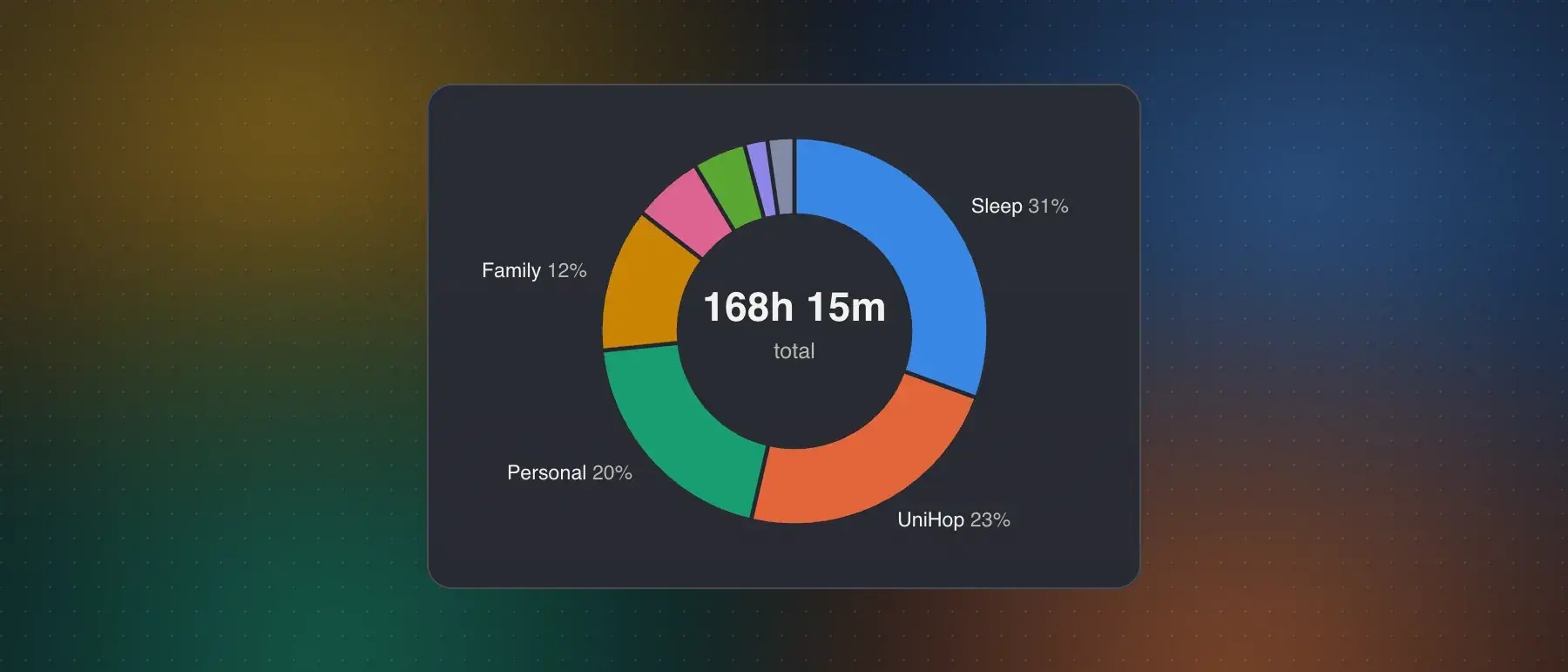
One quirk I'm known to be extreme about is how much I track.
I've tracked every minute of every day for about nine years now. When I tell people this, the first thing they usually say is that it must take so much time. It doesn't. And lately, thanks to AI, it's taken on a whole new life that I want to share with you.
Where it started
Back in 2009, I tracked one week of my life by the minute and wrote a post called How I Spend My Time. Two years later, living abroad with my family and running a software business that mostly ran itself, I did it again in How I Spend My Time Now. That week I worked less than eight hours, slept about eight a night, and spent most of the rest with my family or on things I loved. Tim Ferriss later featured that post on his blog as a case study of what a real four-hour workweek looks like with a family.
At the time, tracking was an occasional experiment. Once in a while I'd log a full week and see what I could learn from it.
What I wrote in that first post still holds: once I start diligently tracking something, I become more conscious of what I'm doing, and I almost instantly start seeing improvement. I found so much benefit in it that eventually I just never stopped.
What it actually looks like
Whenever I switch tasks, I take a few seconds to click the time, choose the project and category, and type a little description of what I just did. That's it. Then I move on to the next thing.
That small pause does something for me beyond the data. It keeps me present and focused on what I'm doing. I've simply made a habit of it, the same way you might glance at a clock.
Some parts of the day move fast. I might take a bathroom break, eat an apple, fix a little something in the house, check email, read a newsletter, and talk with my family, all in the same fifteen minutes. I don't split all of that out. I'll group it under something like "home and family" and keep going. It just depends.
If you wanted to try this, setting a timer every 30 or 60 minutes helps in the beginning, just to make sure you log something once an hour. After a while, the habit takes over.
The spreadsheet years
For most of those nine years, all of this lived in spreadsheets. Very elaborate spreadsheets, with charts and graphs and a KPI sheet with a dozen tabs to help me track my values, my goals, and how I was living according to the things that are important to me.
Every Sunday I'd go through all of it. Reviewing the previous week took about an hour. Planning the coming week, with the hundred or so tasks I usually have in ClickUp, took another two or three hours.
It was worth it. It set me up for success in the many things I have going on in business and life. But it was a lot of spreadsheet.
Then AI changed what was possible
This year, with the help of AI coding tools, I turned all of this into an app.
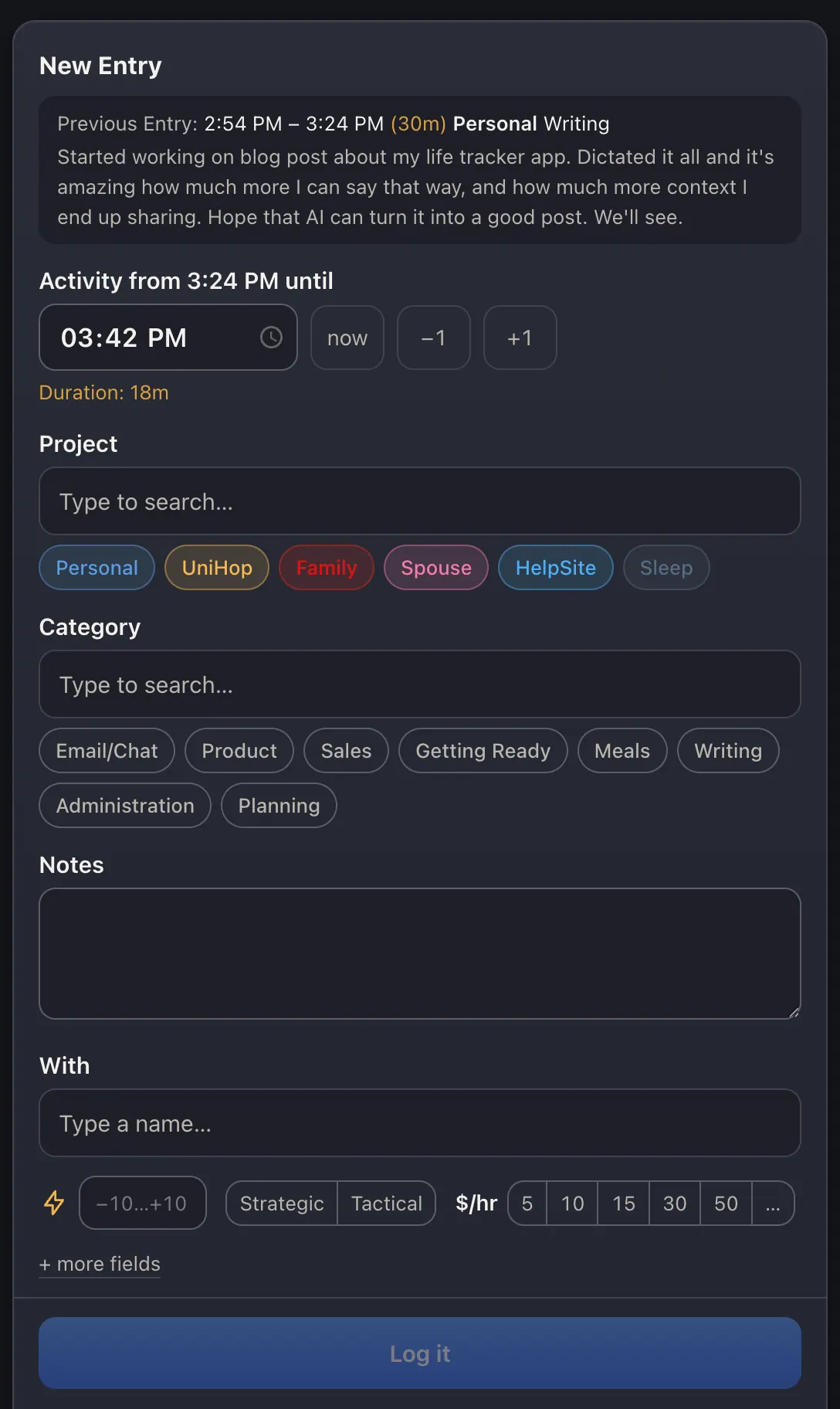
Logging is much faster now. When I mention a person, a book, a movie, or a TV series, the app recognizes it and tags it automatically, even pulling in the cover image and synopsis from public sources. If I type the name of a series I'm watching, it already knows how many episodes are in each season and which one I'm on. I tap the the episodes I watched and it marks them off. I think that's really cool.
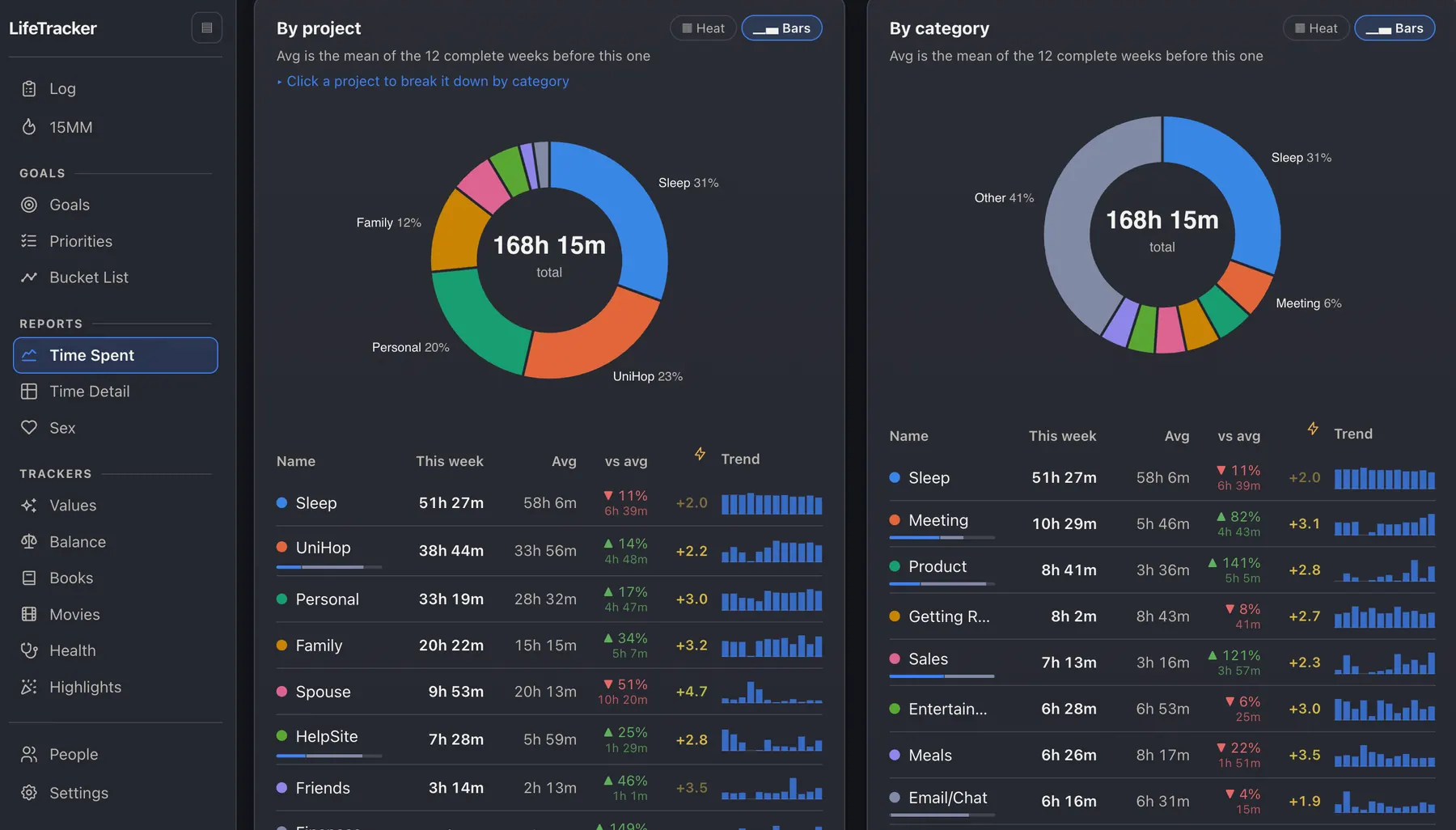
The reports are where it gets interesting, though. It still shows me the basics, like how much time I'm spending in each project and each area of my life. But it's goes into much more detail on things the spreadsheets never quite captured:
- Energy. How much each project and activity energizes me or depletes me, and how that trends over time.
- Strategic versus tactical. How much of my work is spent on strategic efforts versus tactical ones.
- Balance. How rested or burnt out I am across seven areas of life: mental, physical, social, emotional, sensory, spiritual, and creative.
- What I could hire out. What it would cost to pay someone else to do the tasks that drain me or that don't need me.
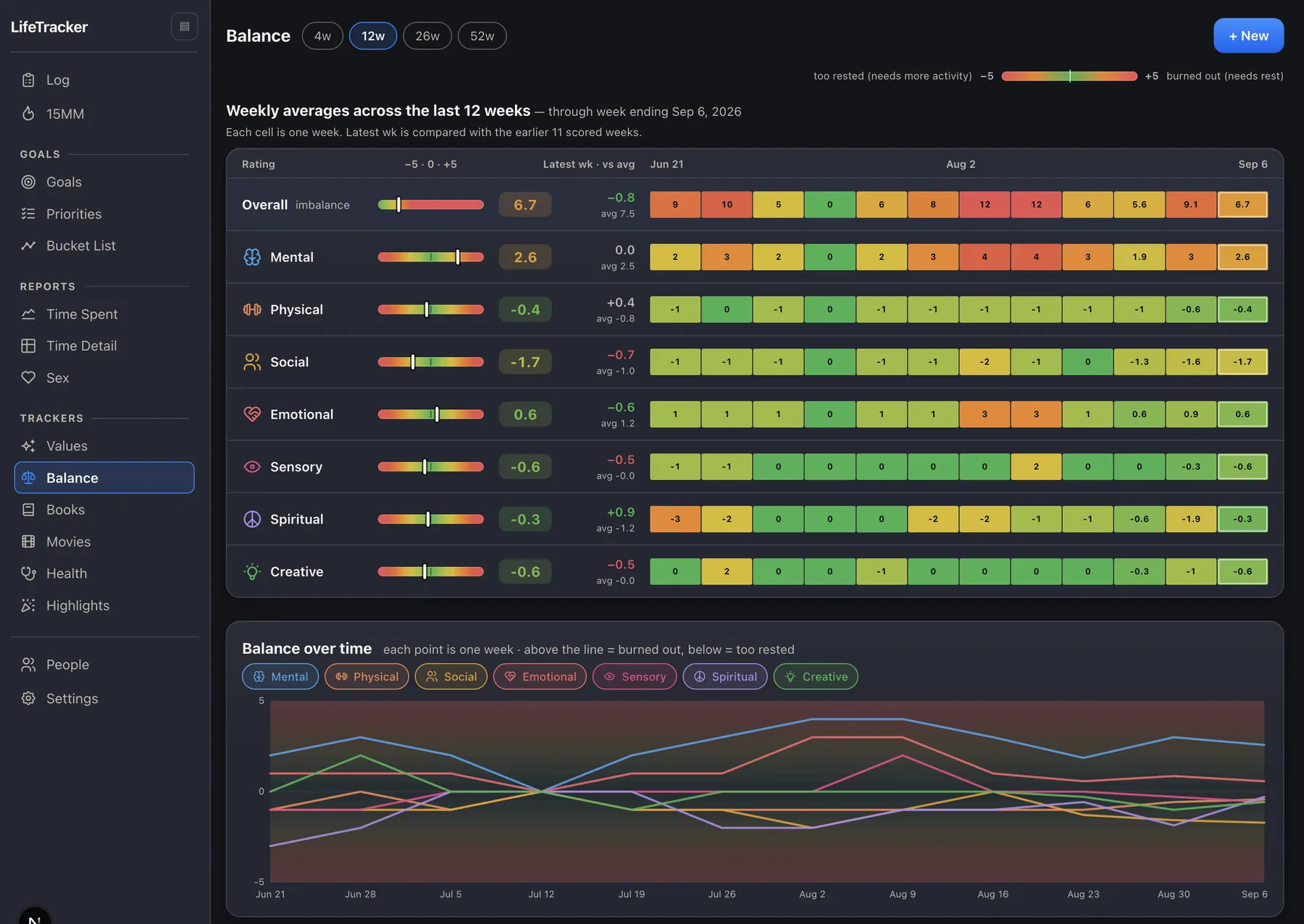
The balance report has been especially helpful lately. I can see, for example, in any given week or over months, whether I'm consistently exerting myself mentally too much. I feel it in my body, and then I see it on the graph, and that combination pushes me to make more time for rest, meditation, and social time, which has been under-rested for a while.
My wife prefers to do all of this intuitively. She doesn't like tracking any of it. I like to do both. I have exercises and practices that help me stay tuned in to the different parts of myself, my life, and my body. Then I compare what I feel with the day-by-day and week-by-week ratings I've given myself, and I use both to decide how to move forward.
The AI as a coach
Every morning, evening, and Sunday, I run a review with AI that plugs into all of this data. The morning review sets up the day. The evening review captures what happened. The weekly review looks at the whole week, writes a summary, and assesses how I'm doing against my values, my goals, and my short- and long-term priorities.
The review and planning process that used to take me three or four hours now takes about an hour or an hour and a half, with a lot better context and understanding than I had before.
Also, when I was self-grading in the spreadsheets, I was always a little generous with myself. The AI sees everything I actually did. It will say something like, "You really haven't done as much exercise this week as you said you wanted to, so I'm scoring you a 6 out of 10 here" instead of the 8 I might have given myself.
It's become much more accurate over time at giving the exact assessment I would give myself on an honest day. It acts like a coach, reminding me of what I said I wanted and giving me a more honest perspective on how I'm doing.
One concrete example. I was doing a little exercise in the morning, a walk in the afternoon on good days, and one workout a week at the gym with strength training, cross-training, and mobility work. The tracking made it obvious that one strength session a week wasn't enough for my longevity goals. So I added a short second session on weekends at home. It's a change I wouldn't have made without the app telling me what I already half knew.
It tracks the whole life
The app also tracks my health, my bucket list, and yes, my sex life. I'm leaving that screenshot out, but I'll say what it tracks, because I think it matters: who initiated, how often, the intensity, the level of connection, orgasm counts, and the pleasure for each of us. I can look back at the peak experiences of the year and see what circumstances or practices led to them. It's very personal and sensitive, and it helps me keep that part of our life enjoyable and connecting for both of us.
There's also a people section that works like a personal CRM. Every time I log something and mention a person, the app asks if I want to add that entry to their record. I can open anyone's card and see how much time we've spent together, a history of what we've done, and a summary of their life situation. I can set how often I want to stay in touch with someone, and it reminds me when it's time to reach out.
I have plans to take that further, like pulling in recent updates from social media about a person before I reach out, or drafting a note for me to send. I haven't built that yet. I've honestly been giving less attention to the social side of my life lately, and this part of the app is reminding me of that too.
Should I turn this into a product?
I use this app every day, and I've thought about releasing it. I'm just not sure anyone else in the world is as obsessive as I am about documenting their life and learning from it. And if they are, I don't know whether they'd pay for it.
Making it a public tool would be significantly more work. Security, accounts, support, and a stream of feature requests I may not want to build. So for now, it's mine.
But I'm open to it. If this is something you would actually use, I'd love to hear from you. Reply to this email or send me a note and tell me what you'd want it to do and what you'd pay for it. If enough people are interested, I'll build it.
If you want to try tracking your time
You don't need an app. Back in 2016 I wrote a post called Time Mastery Trio with three practices you can start with: a short daily summary, a daily log you update every hour or so, and a one-week experiment of tracking every minute. Any of the free time-tracking tools will do.
Start with one week. Log what you're doing whenever you switch tasks, and set a timer to remind you. At the end of the week, look at where your time went and ask yourself whether you're spending it the way you want to.
That gap between how I'm spending my time and how I want to, is what started all of this for me, and seventeen years later, I'm still enjoying exploring it.